The Real Flex Is the Group Chat: How Collector Communities Became the Ultimate Collectible
Marcus, a 31-year-old graphic designer in Atlanta, turned down $800 on a figure he paid $120 for. Not because he wanted to keep it. Because the person offering the $800 wasn't in his group.
"I could've flipped it easy," he says. "But I had someone in our Discord who'd been looking for that exact colorway for eight months. It felt wrong to send it to a stranger just because they had more money."
That decision—prioritizing community loyalty over maximum profit—would have seemed irrational to collectors five years ago. Today, it's becoming a recognizable pattern across designer toy circles nationwide. The community itself has become the collectible. And some people are curating their social access with the same intentionality they once reserved for their shelves.
What You're Actually Buying Into
On the surface, collector communities look like a support network for the hobby—people sharing drop alerts, authentication tips, and shelf photos. And they are that. But the most active and tightly-bonded groups offer something that goes well beyond logistics.
Early information is the obvious one. In a market where limited drops sell out in under two minutes and secondary prices spike within hours, being part of a trusted network with good sourcing intelligence is worth real money. Members of tight circles routinely get advance notice on collabs, regional exclusives, and artist drops that never make it to mainstream collector forums before they're gone.
Authentication is another major value-add. Counterfeit designer toys have become sophisticated enough that casual collectors get burned regularly. Within established communities, there's usually someone who has handled enough pieces to spot a fake by the weight of the packaging or the texture of the paint. That expertise, shared freely among trusted members, is a service no third-party authentication platform can fully replicate at the speed collectors need.
But the thing that keeps people in these groups—the thing that makes Marcus pass on $800—is harder to quantify. It's the sense of being known.
The Texture of Belonging
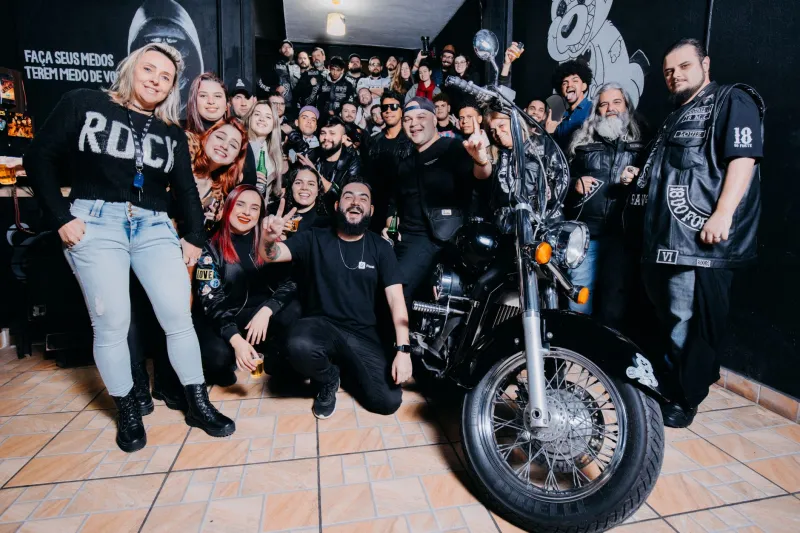
In a hobby that can feel lonely from the outside, collector communities provide a specific kind of social validation that doesn't exist elsewhere. Your coworkers don't care that you landed a rare regional variant. Your family thinks the figures are "kind of creepy." But in the group chat, that same acquisition gets thirty reactions and a thread that runs for two hours.
This isn't trivial. Psychologists who study fandom and collector culture have noted that the social recognition of acquisitions is often as emotionally rewarding as the acquisition itself. The group chat, the Discord channel, the regional meetup—these are the spaces where the meaning of collecting gets made and reinforced.
Regional meetups in particular have developed a distinct culture in cities like Los Angeles, New York, Chicago, and Portland. What often starts as a casual swap meet at a coffee shop evolves into something closer to a standing social institution. People who met over a shared love of a specific artist's work end up becoming genuine friends, collaborators, and—in more than a few documented cases—business partners.
The Gatekeeping Debate
Not everyone is comfortable with how exclusive some of these circles have become. The designer toy world has always had a tension between accessibility and scarcity—the same dynamic that drives blind box excitement also drives community gatekeeping.
Some groups are genuinely invitation-only, with vetting processes that would feel at home in a professional networking context. New members need to be vouched for by existing members, demonstrate a certain level of knowledge or collection depth, and sometimes pass through a probationary period before gaining access to the most sensitive channels—the ones where people post pre-sale opportunities, private trades, and off-market pieces.
Critics argue this creates an insider/outsider dynamic that undercuts the hobby's community spirit. Defenders counter that trust is the actual currency in these spaces, and trust takes time to establish. Both positions have merit. The tension between them is probably what keeps the ecosystem honest.
What's undeniable is that access to a trusted inner circle translates to measurable advantages—better prices, earlier information, and protection from fraud—that compound over time. Collectors who've been embedded in strong communities for three or more years tend to have significantly better collections relative to their spend than those who operate solo.
Artists Are Paying Attention
One of the more interesting developments in this space is how independent artists and smaller studios have started orienting their release strategies around established collector communities rather than open-market drops.
Some artists now do community-first releases—making a limited run available to a specific Discord or collector group before anything goes public. The logic is straightforward: these buyers are enthusiasts who will take care of the piece, talk about it authentically, and support future work. They're not pure flippers. The relationship has long-term value beyond a single transaction.
This creates a feedback loop where being part of a respected community gives you access to better pieces, which strengthens the community's reputation, which attracts more artists who want that audience. The community becomes a platform, and membership in it becomes genuinely valuable in ways that show up on secondary market access, not just in warm feelings.
Choosing Your Crew
For collectors still operating primarily as solo hunters—monitoring drops alone, making purchase decisions in isolation, selling through public resale platforms—the community question is worth sitting with.
The practical entry point is usually a Discord server tied to a specific artist or toy line. From there, consistent positive participation—sharing useful information, being honest about authenticity concerns, showing up for other members' wins—builds the kind of reputation that gets you invited into tighter circles over time.
It's slower than just grinding the secondary market. But the collectors who've put in that social work consistently describe it as the best investment they've made in the hobby. Not because of what it's worth financially, though that's real. Because of what it feels like to have people who get it.
In a hobby built around objects, the most durable thing you can collect turns out to be people.