Curated for Life: Why Younger Collectors Are Done Treating Their Shelves Like Stock Portfolios
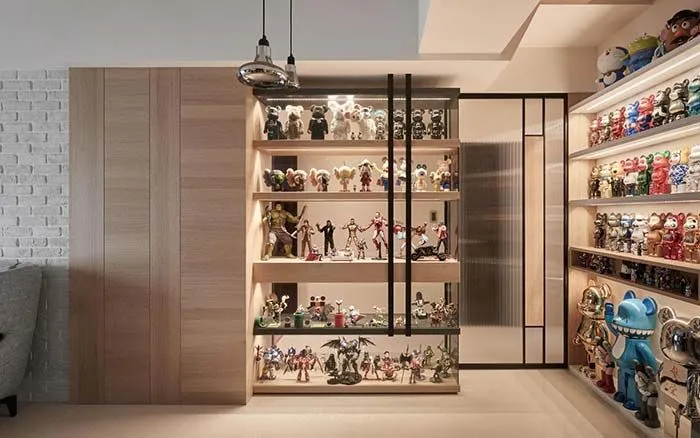
Photo: stylish young adult curating designer toy display shelf in modern apartment, via i.pinimg.com
For a while, the loudest conversation in the designer toy space was about money. Resale multiples. Secondary market trends. Which blind box series was worth cracking open and which was worth keeping sealed. The language of the hobby started sounding less like a passion and more like a brokerage call.
But something's been quietly shifting, particularly among younger collectors. A growing number of Gen Z buyers are stepping off the speculation treadmill entirely — not because they can't play the game, but because they've decided they don't want to. Instead, they're building something different: intentional, permanent collections that function less like portfolios and more like personal museums.
And the implications of that shift go way deeper than shelf aesthetics.
The Flip Economy's Unlikely Backlash
It would be easy to assume that a generation raised on side hustles and financial anxiety would be the most transactional collectors in history. And for a while, that narrative held. When resale platforms made it trivially easy to turn a $20 blind box into a $200 profit, plenty of younger buyers leaned in hard.
But the flip economy has a hidden cost that took a few years to become visible: it turns objects into obligations. When everything you own is a potential trade, nothing gets to just be yours. You're not a collector anymore — you're an inventory manager.
A meaningful portion of Gen Z collectors are pushing back against that dynamic. They're making deliberate decisions to buy things they intend to keep, to display them in ways that reflect personal taste rather than Instagram optimization, and to measure the value of their collections in terms of meaning rather than market price.
"I had a period where I was flipping everything," says Marcus, a 24-year-old collector in Atlanta. "And I made money. But I also looked at my shelf one day and realized I didn't actually like anything on it. I'd traded away the pieces I cared about and kept the ones that were worth the most. That felt backwards."
The Personal Museum Model
The shift toward permanence has given rise to what some collectors are calling the "personal museum" approach — treating your collection as a curated body of work rather than a rotating inventory. It borrows the logic of institutional curation: intentionality, coherence, and a long-term perspective on what belongs together and why.
This isn't about having the most valuable pieces or the most complete set. It's about building a collection that tells a story — your story. Which artists resonated with you during which periods of your life. Which characters felt like mirrors. Which purchases marked a turning point or commemorated something worth remembering.
For many Gen Z collectors, that story includes designer toys and art figures at its center — objects that sit at the intersection of pop culture, fine art, and personal identity in a way that nothing else quite does. A Labubu figure from a limited series isn't just a vinyl toy. It's a timestamp, a conversation piece, and a statement of aesthetic values all at once.
Display as Self-Expression
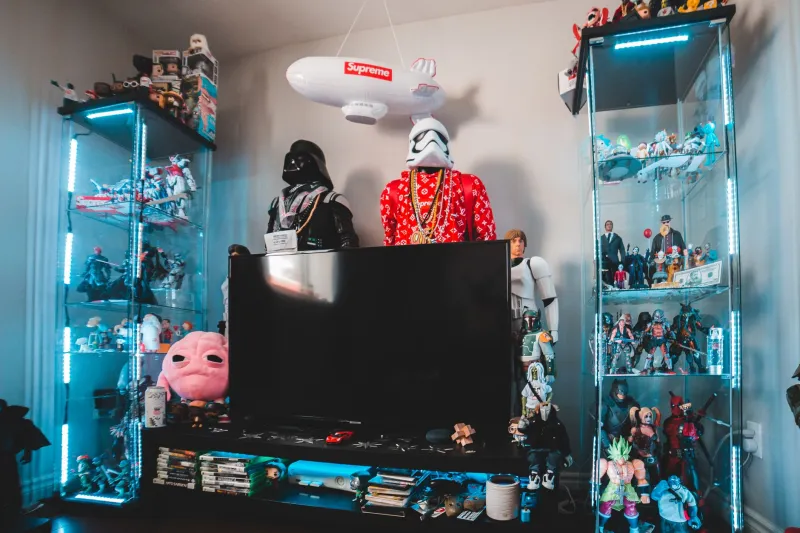
The way younger collectors are displaying their pieces reflects this shift in philosophy. Rather than the traditional approach of maximizing shelf space or organizing by series, many are curating their displays the way a gallery would — with attention to negative space, lighting, visual rhythm, and the relationships between objects.
Apartment tours that feature well-designed collection displays are some of the most-shared content in collector communities right now. Not because the pieces are the rarest or most expensive, but because the overall effect is visually compelling and feels genuinely personal. You can tell something about the person who built it just by looking at it.
This display-forward mentality has also driven demand for a different kind of purchase. Pieces that photograph beautifully, that work in conversation with other objects, that have a visual identity strong enough to anchor a space — these are increasingly what younger collectors are seeking out, sometimes over pieces with stronger resale potential.
Permanence in a Digital World
There's a deeper irony at work here that's worth sitting with. Gen Z is the first generation to grow up with a genuinely digital-native existence — social media from adolescence, streaming instead of owning, cloud storage replacing physical media. By most predictions, they should be the least attached to physical objects of any generation.
And yet here they are, building permanent collections of tangible things and thinking seriously about what those things will mean in twenty years.
Some researchers who study consumer behavior point to this as a kind of counterreaction — a reaching for permanence precisely because so much of digital life is ephemeral. A tweet disappears. A playlist gets deleted. An algorithm stops recommending something and it effectively ceases to exist. But a figure on a shelf is just there, day after day, accumulating meaning through presence alone.
There's also an identity dimension that's hard to overstate. In an era when self-expression happens largely through content — what you post, what you share, what you engage with — physical collections offer something different: a version of yourself that exists independently of any platform. Your shelves are yours in a way that your social media profile never quite is.
What Gets Kept Defines What Gets Remembered
Museums, at their core, are institutions of memory. They decide what gets preserved, what gets displayed, and therefore what gets remembered. Personal collections work the same way on a smaller scale. The things you choose to keep — and keep permanently — are the things you're saying matter.
For younger collectors building intentional collections right now, that's a statement worth making. Not every purchase needs to be a flip. Not every piece needs to justify its shelf space with a resale multiple. Some things just belong to you, and that's reason enough.
At Store Labubu, we've always believed that the best collections are the ones that mean something to the person who built them. Whether you're drawn to a piece for its artistry, its cultural significance, its connection to a memory, or just the way it looks in your space — that's a valid reason to own it. Permanently.
Collect what you love. Keep what matters. Build something that's unmistakably, irreversibly yours.