Price Tag vs. Heart: Why the Cheapest Thing on Your Shelf Might Mean the Most
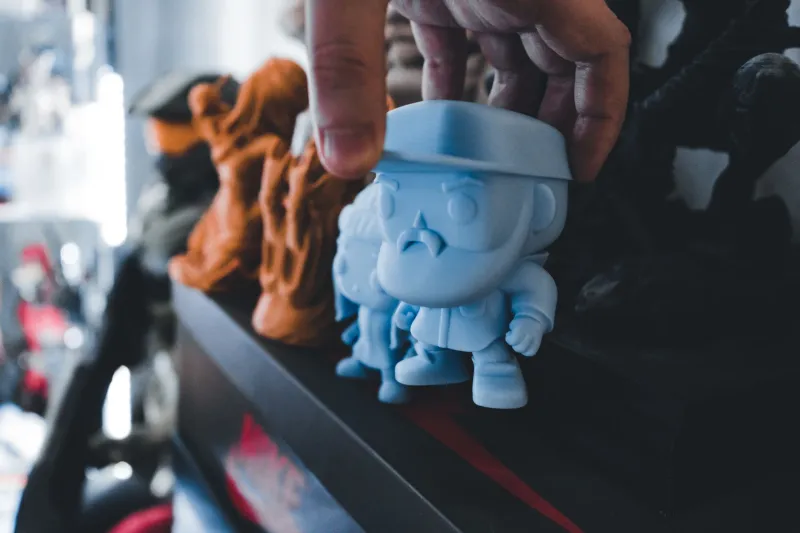
Let's say you've got a shelf that tells a story. On one end, there's a limited-edition collab figure you tracked down for months — authenticated, pristine, worth more than your first car payment. On the other end, there's a beat-up little guy you grabbed from a convention floor for thirty bucks because something about the color caught your eye at the wrong moment. Guess which one you actually look at every morning?
If you've been collecting designer toys for any length of time, you probably already know the answer. And you're probably a little embarrassed about it.
You shouldn't be. What you're experiencing has a name — collectors call it the prestige gap — and it's one of the most quietly universal experiences in the hobby. The pieces that cost the most don't always carry the most weight. Sometimes the emotional center of a collection lives somewhere completely unexpected, in a figure that barely registers on the resale market but somehow anchors everything else on the shelf.
The Trophy Problem
There's a specific kind of pressure that comes with acquiring a high-value piece. You've done the research, paid the premium, maybe even had it authenticated. The moment it arrives, it almost immediately becomes something to protect rather than something to enjoy. You think twice before touching it. You position it carefully, away from direct light, away from curious hands. It becomes a responsibility.
Marcus, a collector based in Portland who's been building his designer toy collection for over a decade, describes it this way: "My most expensive piece is in a UV-protected case. I think I've taken it out twice. Meanwhile, I've got this little Labubu I pulled from a blind box at a pop-up in Seattle — I was having a rough week, it was totally random — and that thing goes everywhere with me. It's on my desk. It's been in my bag. It's got a small scratch on its ear and I don't even care."
That scratch, he says, is part of why he loves it. It has a history.
Memory Is the Real Currency
Psychologists who study attachment and material possessions have long noted that humans bond most deeply with objects tied to specific emotional experiences — not objects tied to financial investment. The technical term is autobiographical memory anchoring, but in plain terms it just means: you love the thing that reminds you of something real.
A $500 figure you bought as a calculated investment doesn't anchor to much except the transaction. A $40 figure you found at a swap meet in Austin the weekend your best friend got married? That thing is loaded. Every time you glance at it, you're not just seeing a toy — you're time-traveling.
This is why so many long-term collectors, when asked to point to their favorite piece, pause before answering. They're not calculating. They're remembering.
Jade, a collector in Chicago who focuses primarily on art figures and vinyl toys, put it bluntly: "I have pieces I'd never sell because they're worth a lot. I have pieces I'd never sell because I'd feel like I was selling a piece of myself. Those are two completely different lists, and they barely overlap."
The Blind Box Effect
There's something worth examining in the specific magic of blind box culture here. Part of what makes those pulls so memorable — and so emotionally sticky — is the element of chance. You didn't strategize your way into that figure. You didn't win an auction or grind through a waitlist. You just reached in and got lucky, or unlucky, or somewhere in between.
That randomness creates a different kind of ownership. The figure chose you as much as you chose it. There's a story built in from the very first second.
Compare that to a highly anticipated grail acquisition. You've been thinking about that piece for so long, imagining it on your shelf, that by the time it actually arrives, reality almost can't compete with the version you'd built in your head. The hunt had more texture than the having.
What This Actually Means for How You Collect
None of this is an argument against chasing high-value pieces. Investment-minded collecting is a legitimate and genuinely rewarding approach, and there's real satisfaction in building a collection with financial depth. But it is an argument for paying attention to what's actually moving you — not just what's impressing other people.
A few things veteran collectors suggest keeping in mind:
Don't let prestige override instinct. If a piece speaks to you at a price you can actually feel good about, that's worth more than you think. The market doesn't know your story.
Let your collection have texture. A shelf full of nothing but certified grails can start to feel like a portfolio rather than a personal statement. Mix in the weird, the cheap, the impulse buy. That's where the personality lives.
Revisit your attachment regularly. Ask yourself, honestly, which pieces you'd actually miss. Not which ones you'd regret selling financially — which ones would leave an actual hole. That list is your real collection.
Don't over-protect the joy out of something. Figures are meant to exist in the world. There's a version of collecting that's so cautious it stops being fun. Some scratches are worth having.
The Shelf That Feels Like You
The most compelling collections — the ones that stop people mid-conversation when they walk into a room — aren't necessarily the most expensive. They're the ones that feel inhabited. Like someone actually lives with these pieces, thinks about them, chose them for reasons that go beyond resale potential.
That's the thing about the prestige gap. Once you stop being embarrassed by it and start leaning into it, it actually becomes your greatest curatorial tool. The pieces you're most attached to, regardless of their price point, are the ones that make your collection yours instead of just impressive.
So go ahead. Give that beat-up thirty-dollar blind box pull the spot it deserves. The grail can hold down the corner.
Your shelf will thank you for the honesty.