Got the Grail, Lost the Feeling: The Strange Emptiness That Follows Every Big Collector Win
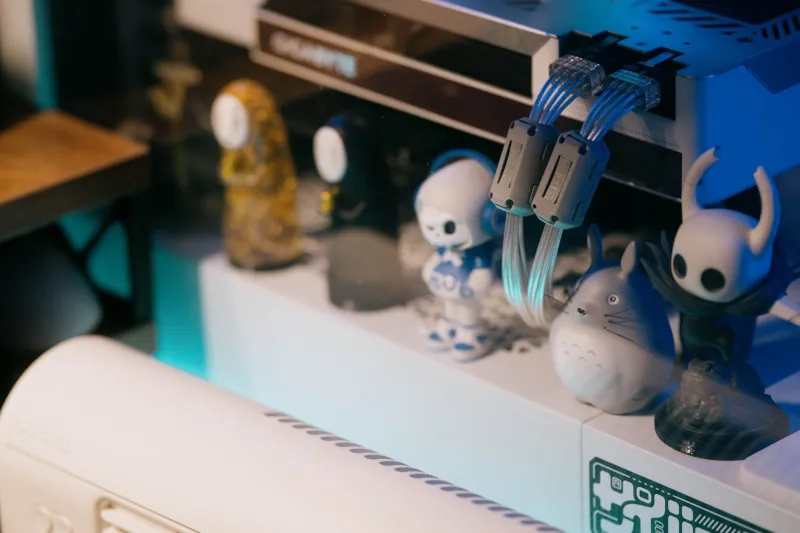
It happened to Marcus, a 29-year-old designer toy collector from Austin, Texas, about forty-eight hours after his most-wanted Labubu finally arrived on his doorstep. He'd spent the better part of three months tracking resale listings, setting price alerts, and losing sleep over missed drops. When the package finally landed, the unboxing was everything he'd imagined. The figure was perfect. The colorway was exactly right. He placed it on the shelf, stepped back, and felt... fine.
"Not bad. Not overwhelmed. Just fine," he said. "By the next morning I was already looking at what dropped next."
If you've collected anything for longer than a few months, you already know this feeling. It has a name.
Meet Your Brain's Least Favorite Feature
Psychologists call it hedonic adaptation — the very human tendency to return to a baseline emotional state after any significant positive (or negative) event. You get the raise, the new apartment, the relationship you wanted. For a moment, life feels transformed. Then your nervous system recalibrates, and the new thing becomes the normal thing, and you're back to scanning the horizon for the next upgrade.
For collectors, this cycle runs on an especially tight loop. The designer toy market is practically engineered to exploit it. Limited drops, blind box uncertainty, short restock windows — all of it cranks the anticipation dial up to maximum. And anticipation, it turns out, is neurologically more rewarding than possession.
Research on dopamine systems consistently shows that the expectation of a reward activates the brain's pleasure circuits more intensely than the reward itself. The hunt is the high. Ownership is just the hangover.
The Chase Is the Product
This isn't a bug in collecting culture. For a lot of people, it's the entire point.
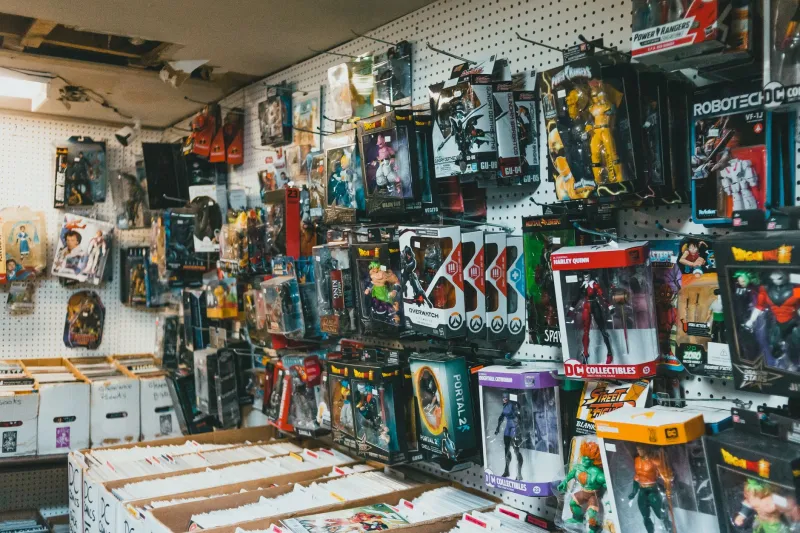
Spend time in any serious collector community — Discord servers, Reddit threads, the comment sections on major drops — and you'll notice that the most animated conversations happen before a figure arrives. People are theorizing about colorways, comparing box art, debating whether the new release will hold value. The figure itself almost becomes secondary to the shared experience of wanting it together.
"I've realized the community around the drop is honestly more fun than the thing I'm dropping for," says Danielle, a Philadelphia-based collector who focuses primarily on Labubu and select Pop Mart releases. "The week before a big drop I'm talking to people I've never met in real life, and we're all hyped together. That feeling is real. What comes after is just... quieter."
This is worth sitting with. If the social ritual of anticipation is genuinely delivering more satisfaction than the object itself, that changes how you might want to think about your collection — and your spending.
When the Shelf Becomes a Graveyard of Former Obsessions
The emotional letdown of acquisition isn't just a personal quirk. It compounds over time in ways that can quietly reshape your relationship with the hobby.
Some collectors describe walking past shelves full of figures they once desperately wanted and feeling almost nothing. Not regret, not pride — just a kind of ambient neutrality. Each piece represents a former version of want, now fully satisfied and therefore invisible.
That's not a failure of taste. That's hedonic adaptation doing exactly what it does. But if you're not paying attention to the pattern, it's easy to mistake the emptiness for a sign that you need to chase something bigger, rarer, more expensive. The escalation trap is real, and it's expensive.
Collector and resale market observer Tyler, based in Chicago, puts it bluntly: "I've watched people convince themselves they need a $400 grail piece when what they actually need is something to look forward to. Those aren't the same thing. One costs four hundred dollars."
Strategies That Actually Help
So what do you do with this information? A few approaches that collectors have found genuinely useful:
Slow the acquisition pace intentionally. This sounds obvious, but it runs counter to how drop culture is designed. When you force space between purchases — even just a few weeks — the anticipation cycle gets longer, and the arrival of something new actually feels like an event again. Scarcity you create yourself hits different.
Document the hunt, not just the haul. Some collectors have started keeping informal journals or social posts about the process of chasing a piece: the near-misses, the price negotiations, the moment they finally committed. Revisiting that documentation later gives the figure a richer story, which makes it harder to stop seeing it on the shelf.
Collect around themes that mean something beyond the market. Collectors who organize their shelves around personal meaning — a specific artist they love, a visual aesthetic they're genuinely obsessed with, a character that connects to something in their life — report more sustained satisfaction with their collections than people chasing whatever's trending. The figure doesn't have to be rare to be meaningful.
Build community into the ritual. If the social dimension of anticipation is where the real dopamine lives, lean into it deliberately. Host watch parties for drops. Post your wishlist publicly. Find the people who are chasing the same things you are. The shared experience extends and deepens the emotional payoff in ways that solo collecting often can't.
The Piece That Doesn't Disappoint
Here's the honest truth that most collector content won't tell you: no figure is going to hold the emotional weight you assigned to it during the chase. That's not a flaw in the figure. That's just how human desire works. The wanting is always larger than the having.
But that doesn't mean collecting is a hollow pursuit. It means the value was never entirely in the object to begin with. It's in the story you built around it, the community you found while chasing it, the aesthetic vision you're slowly assembling shelf by shelf.
Marcus, back in Austin, has made a kind of peace with the cycle. He still tracks drops. He still gets excited. But he's stopped expecting the arrival of a figure to feel like an arrival of anything more than a really well-designed piece of vinyl.
"The shelf still makes me happy," he says. "I just stopped waiting for one piece to fix everything. That was never what it was for."
Same, honestly. Same.