Touch It, Display It, Trade It: Why Physical Figures Are Winning the Collectibles War
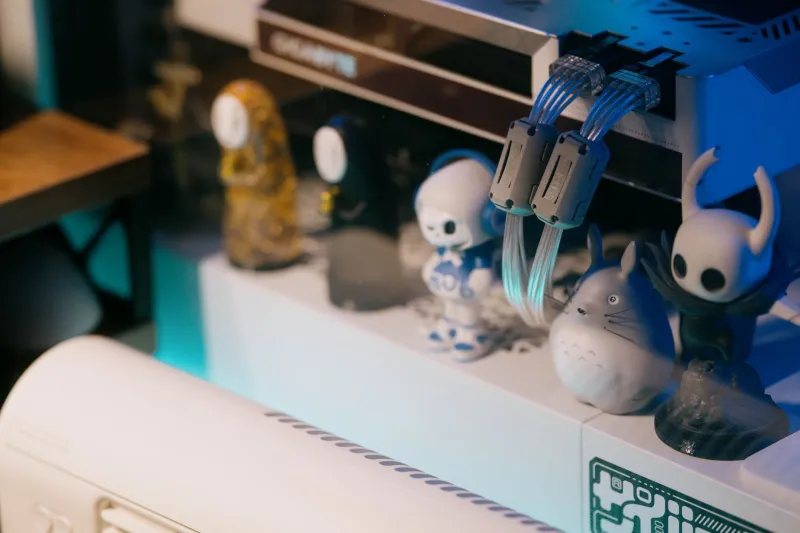
There's a moment every collector knows. You pull a figure out of its box — carefully, almost ceremonially — and set it on your shelf. The light catches it just right. You step back and feel something that no screenshot, no wallet transaction, no Discord announcement ever quite managed to replicate. It's real. It's yours. You can touch it.
For a few years there, a loud corner of the internet tried to convince us that owning something meant holding a token on a blockchain. That a JPEG with a certificate of authenticity baked into smart contract code was the future of collecting. A lot of people believed it. Some of them lost serious money. And now, many of those same collectors have quietly pivoted — back to shelves, back to blind boxes, back to vinyl and resin and the satisfying weight of a well-made figure in your hands.
The resurgence of physical designer toys isn't just a market correction. It's a cultural statement.
The NFT Hangover Is Real
Let's not sugarcoat it. The NFT boom of 2021 and 2022 pulled a lot of younger collectors into a speculative frenzy that had very little to do with aesthetics, community, or the actual joy of owning something beautiful. It was about flipping, about floor prices, about Discord alpha and wallet screenshots. For a community that had built its identity around taste — around curating a shelf that said something about who you are — the NFT space often felt hollow.
Marcus, a 29-year-old collector based in Chicago, put it plainly: "I spent probably four grand on digital assets between 2021 and early 2022. At the peak, my portfolio looked great on paper. Then it didn't. But the thing that actually bothered me wasn't the money — it was that I had nothing to show for it. No shelf. No display. Nothing my friends could come over and actually see."
His experience isn't unusual. Across Reddit threads, collector forums, and in-person toy fairs from New York to Los Angeles, the post-NFT sentiment is consistent: digital ownership scratched a financial itch but never delivered the emotional payoff that physical collecting always has.
Why Physical Hits Different
Designer toys — particularly figures from artists like Kasing Lung, whose Labubu character has become one of the most recognizable faces in the space — offer something that blockchain tokens structurally cannot: a sensory experience.
You can photograph a physical figure against a moody backdrop and post it to Instagram. You can arrange it alongside other pieces in a display that reflects your personality. You can bring it to a trade meet, hand it to someone, watch their face when they hold it for the first time. The object carries weight — literally and figuratively.
There's also the question of permanence. A server goes down, a platform shuts, a marketplace loses its licensing deal — and suddenly your digital asset is stranded in a wallet with no infrastructure around it. A well-stored vinyl figure, on the other hand, doesn't care about server uptime. It just sits there, appreciating (or at least holding its ground), waiting for someone to rediscover it.
Jasmine, a 26-year-old collector from Atlanta who runs a modest resale side hustle, made the switch back to physical about eighteen months ago. "I started with Labubu because a friend brought one to a hangout and I was obsessed immediately," she said. "The character design is so specific — those little teeth, the ears — it's not trying to be anything other than what it is. And I can hold it. I can trade it at a show. I can gift it. Try doing that with an NFT."
The Authenticity Factor
Gen Z and millennials — the two demographics driving the designer toy boom — have developed finely tuned radar for what's genuine and what's performative. The NFT space, for all its early promise, eventually started to feel like the latter. Influencers shilling projects. Celebrity endorsements for tokens that evaporated in months. The whole ecosystem began to smell less like a creative community and more like a multilevel marketing pitch with better branding.
Physical collecting, by contrast, has a different texture. The community that's built up around designer toys — around Labubu, around Pop Mart drops, around limited-edition artist collaborations — is rooted in actual enthusiasm for the objects themselves. People line up for blind box releases not because they're chasing floor prices but because they genuinely want the figure. The secondary market exists, sure, and some pieces command serious resale premiums. But the culture isn't defined by the flip.
That authenticity matters. It's why collector meetups feel more like art openings than trading floors. It's why the Labubu community on social media skews toward aesthetic photography and shelf tours rather than price charts and exit strategies.
The Investment Case — Without the Speculation Spiral
None of this means physical figures are immune to market dynamics. Limited-edition Labubu releases regularly sell for multiples of their retail price on the secondary market. Certain colorways and collaborations have held or grown in value over time, making them legitimate alternative assets for collectors who approach the hobby with some financial intentionality.
But here's what's different: the investment case for physical designer toys is grounded in scarcity you can verify, craftsmanship you can evaluate, and demand from a community that's growing organically. You're not betting on hype cycles driven by anonymous wallets. You're betting on the enduring appeal of great design, on the staying power of characters that people genuinely love.
And when the market softens — as all markets eventually do — you're still left with something. Something that sits on your shelf and looks good and means something to you. That's not nothing. In fact, for a lot of collectors, that's everything.
Collecting Forward
The collectors who burned out on digital assets and found their way back to physical figures aren't bitter. Most of them describe the experience as clarifying. It stripped away the noise and reminded them why they started collecting in the first place — not to watch a portfolio dashboard, but to build something tangible. A shelf that tells a story. A collection that reflects a point of view.
Designer toys, at their best, are exactly that. They're objects made by artists who care deeply about craft, sold to communities that care deeply about culture. You can hold them, display them, photograph them, trade them face-to-face at a convention in a hotel ballroom in Phoenix or a pop-up in Brooklyn.
No wallet required.