Trust Nothing, Verify Everything: How Authentication Anxiety Became Collecting's Newest Obsession
Somewhere in a collector's apartment in Chicago, there's a figure sitting on a shelf that may or may not be real. The collector bought it two years ago from a seller with good feedback, paid a fair secondary market price, and never had a reason to question it. Then a thread appeared in a Discord server they follow, with side-by-side comparison photos of a new wave of counterfeits so convincing that several experienced collectors admitted they couldn't immediately spot the difference.
Now the collector looks at that figure differently. The doubt isn't overwhelming — but it's there. And once it's there, it doesn't fully go away.
This is the texture of authentication anxiety in the designer toy world right now, and it's affecting collectors at every level of the hobby.
The Counterfeit Problem Grew Up
Fake designer toys aren't new. Knockoffs of popular figures have existed almost as long as the secondary market for them. But the quality ceiling on counterfeits has risen dramatically in recent years, and the gap between a convincing fake and the real thing has narrowed in ways that matter.
Early counterfeits were easy to spot if you knew what to look for. The paint application was sloppy. The vinyl had the wrong texture or weight. The packaging fonts were slightly off. Experienced collectors could identify a fake at a glance, and that knowledge felt like a reliable moat.
That moat is shrinking. The counterfeit operations targeting high-demand figures — particularly pieces from Pop Mart's Labubu line and other collectibles with active secondary markets — have invested in better tooling, better materials, and more careful attention to the details that collectors use to authenticate. The result is fakes that require genuine scrutiny to identify, and in some cases, fakes that have fooled people who've been in the hobby for years.
The economics driving this are straightforward. A convincing fake of a figure trading at $300 to $500 on the secondary market is worth producing at scale. The profit margins on quality counterfeits of in-demand pieces are significant, and the barriers to distribution through resale platforms are lower than most collectors would like to believe.
What the Paranoia Actually Feels Like
Collectors who've gone deep on authentication describe a specific kind of cognitive shift that happens once you've been burned or come close to being burned by a fake.
The hobby stops being purely about the pieces and starts being about the provenance of the pieces. Every acquisition becomes a small investigation. You're not just evaluating whether you want something — you're evaluating whether the thing being offered is actually the thing being described.
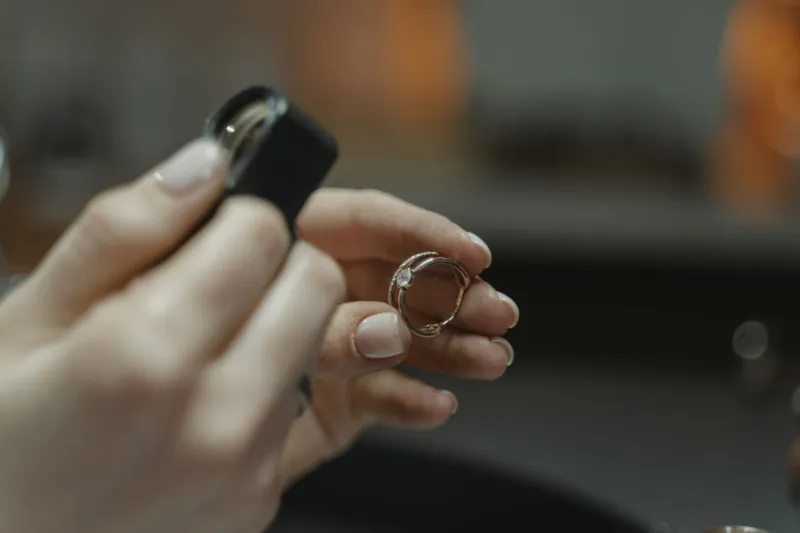
For some collectors, this heightened scrutiny becomes almost compulsive. They'll spend an hour on a single figure, cross-referencing photos against known-authentic examples, measuring proportions, examining paint application under magnification, checking packaging against documented originals. The figure itself becomes almost secondary to the process of verifying it.
The psychological burden here is real and not always acknowledged in community spaces where the dominant energy is enthusiasm and acquisition. Authentication anxiety can make collecting feel exhausting in a way that's hard to articulate to people outside the hobby. You're supposed to be having fun. Instead you're conducting forensic analysis on a vinyl toy at midnight.
The Detection Toolkit: What Actually Works
Community knowledge on authentication has gotten more sophisticated in direct response to better counterfeits, and there's genuine expertise out there worth knowing.
Packaging is your first line of defense — and it's still reliable for most fakes. Authentic Pop Mart packaging has specific characteristics: consistent font weights, particular finishes on printed surfaces, holographic elements with defined visual behavior under light. Counterfeit packaging often gets close but tends to fail on the small details — slightly wrong ink saturation, holograms that don't shift quite right, inner trays that fit loosely where they should fit snugly.
Weight and material texture matter more than most casual collectors realize. Authentic pieces from established manufacturers have a specific density and surface quality that's difficult to replicate cheaply. Holding an authentic figure and a fake of the same piece side by side often makes the difference immediately obvious in a way that photos can't fully convey. This is one reason experienced collectors are skeptical of authentication done purely through images.
Paint application consistency is another reliable tell. Authentic figures have controlled, intentional paint work — clean lines, consistent depth, no bleed at color boundaries. Counterfeits often look fine at a distance but show sloppiness under close inspection, particularly around fine details like facial features or small decorative elements.
Serial numbers and QR codes have become a meaningful authentication layer for newer releases from major manufacturers. Pop Mart, in particular, has invested in digital verification systems that link physical figures to authenticated records. Fakes either omit these entirely, use non-functional codes, or replicate codes that don't match the piece when scanned.
The Role of Seller Reputation in a Paranoid Market
Authentication anxiety has had a measurable effect on how the secondary market operates. Buyers are increasingly willing to pay a premium to purchase from sellers with documented, verifiable track records — collectors whose posts over time establish consistent, credible purchasing history.
This dynamic has elevated the importance of community reputation in ways that go beyond simple feedback scores on resale platforms. A seller who's been active in collector Discord servers for two years, whose collection is publicly documented, and who has a history of authenticated acquisitions is selling something beyond the figure itself. They're selling confidence.
Conversely, anonymous sellers offering in-demand pieces at prices that seem slightly too good have become immediate red flags in a way they weren't a few years ago. The community has learned, sometimes through painful experience, that a deal that doesn't quite make sense usually doesn't.
How the Community Is Fighting Back
The collective response to the counterfeit problem has been one of the more impressive examples of community self-organization in the collector space.
Dedicated authentication channels in major collector Discord servers have become genuinely rigorous. Experienced authenticators volunteer their time to evaluate pieces submitted by community members, building shared knowledge bases of known fake characteristics that get updated as counterfeit operations evolve. The documentation produced by these communities — comparison photos, measurement guides, packaging analysis — is often more detailed and current than anything produced by official channels.
Artists and manufacturers have also started engaging more directly with the authentication problem. Some have implemented more sophisticated anti-counterfeit measures in new releases. Others have created official authentication resources, though these are sometimes slower to update than community-generated knowledge.
There's also a growing conversation about the responsibility of resale platforms to do more. The current state — where the burden of authentication falls almost entirely on individual buyers — is increasingly seen as insufficient given the scale of the problem.
Living With Uncertainty
For most collectors, the honest answer to authentication anxiety isn't perfect certainty — it's calibrated confidence. You do the work, you buy from trusted sources where possible, you learn the tells, and you accept that some residual uncertainty is the cost of participating in a secondary market for high-demand collectibles.
The collector in Chicago with the possibly-questionable figure? They eventually posted photos in a community authentication channel. Fourteen people weighed in. The consensus was that it was almost certainly authentic — the packaging hologram behavior was right, the paint application was consistent, the weight was correct.
Almost certainly. That qualifier doesn't go away. But it's enough to put the figure back on the shelf and stop losing sleep over it.