Your Toy, On the Blockchain: Does Digital Proof of Ownership Actually Matter for Collectors?
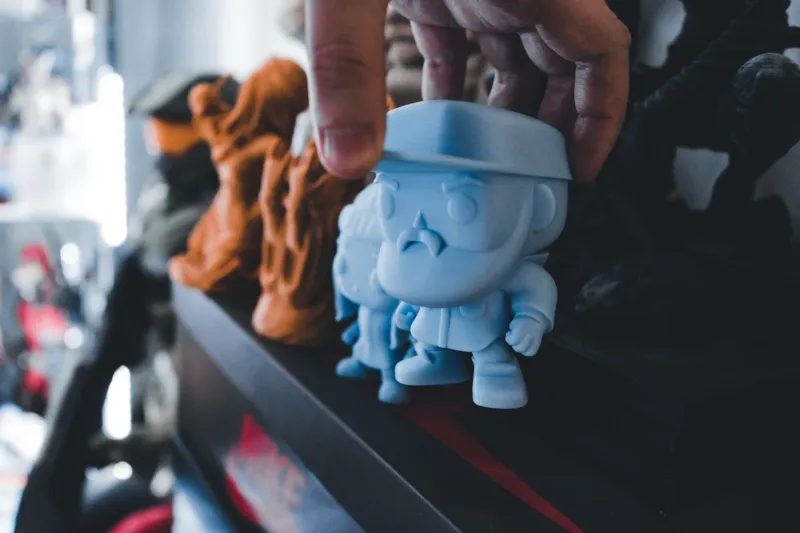
Let's set the scene. You just scored a limited-edition designer figure — maybe something from a small-run drop by an independent artist, maybe a collaboration piece that sold out in eleven minutes. It's sitting on your shelf looking incredible. Now imagine a brand tells you that alongside your physical figure, you also own a digital token on the blockchain that proves the piece is authentic and tracks its ownership history forever.
Does that make you feel better? More secure? Vaguely annoyed? Your answer probably says a lot about where you sit in the ongoing debate over digital verification in the collectibles world.
A Quick Refresher on What We're Actually Talking About
Blockchain, for those who tuned out during the 2021 NFT gold rush, is essentially a distributed digital ledger — a record-keeping system that's very difficult to tamper with and doesn't live on any single server. When a brand issues a digital certificate or NFT tied to a physical product, they're creating a permanent, verifiable entry that says: this specific item exists, it was made in a limited quantity, and here's its ownership history.
The idea of pairing physical collectibles with digital verification isn't brand new — certificates of authenticity have existed in the art world forever — but blockchain adds a layer of decentralization and permanence that paper certificates simply can't match. A paper cert can be forged. A blockchain record is considerably harder to fake.
Several brands in the designer toy and art figure space have experimented with this model, offering what some call "phygital" collectibles: physical objects with embedded or linked digital tokens. The pitch is compelling on paper. The reality, as with most things at the intersection of tech and culture, is more complicated.
The Case For: Authenticity in a Market Full of Fakes
Here's the genuine problem that digital verification is trying to solve. The secondary market for designer toys in the US — and globally — has a counterfeiting problem. Popular characters, limited runs, and high-value figures attract bootleggers, and the quality of fakes has improved enough that casual buyers can get burned. Ask anyone who's bought what they thought was a genuine limited figure on a third-party marketplace and received something that was... definitely not.
For high-value pieces, the authentication question is real. If you're spending $500 or $1,500 on a secondary market figure, you want to know it's legitimate. A blockchain-backed ownership record that traces directly back to the original brand issuance is, in theory, a meaningful tool for that kind of verification. It's not just a sticker in the box that anyone could replicate — it's a cryptographic record.
For artists selling limited editions directly, the appeal is similar. A digital certificate means collectors can prove provenance without relying on the artist being available to authenticate pieces years down the line. That matters if the artist's profile grows and the work appreciates.
The Case Against: Complexity Nobody Needed
Okay, but here's where the skepticism kicks in, and it's worth taking seriously. The vast majority of designer toy collectors are not thinking about blockchain when they're deciding what to buy. They're thinking about whether the figure looks incredible, whether the artist's work speaks to them, and whether the price makes sense. Adding a crypto wallet and a digital token to that equation introduces friction that can actively turn people off.
There's also the question of what happens to the digital component over time. NFT platforms have shuttered. Smart contracts have had exploits. Brands have gone dark and taken their digital infrastructure with them. A physical figure sitting on your shelf will still be there in twenty years. Whether the blockchain token tied to it will still be accessible, readable, and meaningful is a genuinely open question.
And then there's the cultural baggage. The NFT boom of 2021 left a lot of people with a bad taste in their mouths — overpriced JPEGs, environmental concerns, and a general sense that the technology was being used to extract money rather than add value. Some collectors hear "NFT" and immediately check out, regardless of whether the specific application is actually useful.
What Serious Collectors Should Actually Think About
If you're building a collection with any eye toward long-term value, here's a practical framework for thinking about digital verification:
Ask whether the brand has staying power. A blockchain certificate is only as meaningful as the brand behind it. A digital twin issued by a well-established company with a long track record is more meaningful than one issued by a startup that might not exist in five years.
Treat digital verification as a bonus, not a selling point. If the physical figure is compelling on its own merits — the artistry, the rarity, the cultural moment it represents — the digital component is a nice-to-have. If a brand is leading with the blockchain angle as the primary value proposition, that's a flag worth noticing.
Keep records the old-fashioned way too. Original packaging, purchase receipts, and documentation from the original sale are still valuable. Don't let the existence of a digital certificate make you careless with physical proof of purchase.
Watch how the community responds. The collector community is genuinely good at sniffing out gimmicks. If a brand's digital verification program is earning real respect from serious collectors — not just hype from crypto-adjacent marketing — that's a meaningful signal.
Where This Is All Heading
Here's the honest take: digital verification is probably going to become a standard feature of high-end collectibles over the next decade, not because the technology is perfect, but because the authentication problem it's solving is real and getting worse as the market grows. The rough edges will get smoother. The user experience will improve. And the collector community will gradually develop clearer norms around what digital verification actually means for value.
For now, though, the most important thing a figure can do is earn its place on your shelf on its own terms — the craft, the concept, the story behind it. The blockchain is just a receipt. A really fancy, decentralized, cryptographically secured receipt.
And honestly? The figure still matters more than the paperwork.