The Joy Window: Understanding Why the High of a New Piece Fades So Fast
The package arrives. You know the one. You've been tracking it across three states, refreshing the shipping app at embarrassing intervals. You cut the tape. You open the box. And for a few minutes—maybe a few days if you're lucky—everything is exactly as good as you imagined it would be.
Then it isn't.
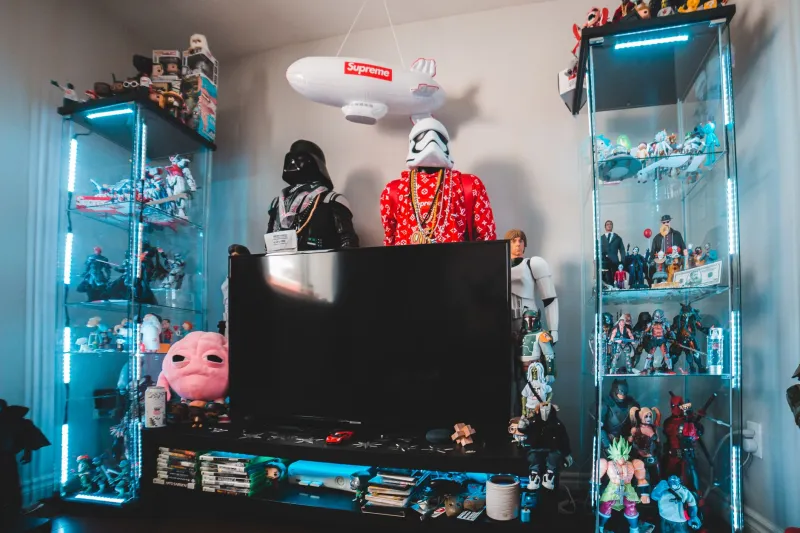
The figure sits on the shelf. It's beautiful. You objectively know it's beautiful. But the feeling that drove you through weeks of F5-ing, Discord monitoring, and mental negotiation about whether the resale price was actually reasonable... that feeling is gone. Replaced by something quieter. Something that, if you're honest, feels a little bit like nothing.
Welcome to hedonic adaptation. It's not a collector problem. It's a human problem. But collectors experience it in a particularly concentrated form, and understanding it changes how you engage with the hobby.
The Science Behind the Fade
Hedonic adaptation is the brain's tendency to return to a baseline emotional state after any significant positive or negative event. Win the lottery, move to your dream city, land the grail you've been chasing for a year—your brain will, within a surprisingly short window, recalibrate to something close to where it started.
For acquisitions specifically, research on consumer psychology suggests the happiness peak typically occurs before the purchase, during the anticipation phase, rather than after it. The hunt, the near-misses, the moment you confirm the order—these generate the most intense emotional activation. Ownership itself is almost anticlimactic by comparison.
This is why the unboxing video genre is so compelling to watch even when it's not your box. You're borrowing someone else's anticipation window, the narrow band of maximum emotional intensity before adaptation sets in.
For collectors, this dynamic plays out on a compressed timeline. The average reported "peak satisfaction window" for a new acquisition—the period during which the piece feels genuinely exciting rather than simply present—tends to run between 48 hours and two weeks, depending on how long the hunt lasted and how much emotional investment preceded the purchase.
After that, the brain moves on. It's not ingratitude. It's biology.
Why Grail Pieces Hit Hardest and Fade Fastest
Counter-intuitively, the pieces that generate the most pre-purchase excitement often trigger the most pronounced post-acquisition flatness. When you've spent months building a mental narrative around a specific figure—what it'll look like on your shelf, how it'll feel to finally own it, the story you'll tell about how you got it—reality has an almost impossible standard to meet.
The figure is just a figure. A beautiful, well-crafted, legitimately special figure. But it can't live up to the version of itself that existed in your imagination during the hunt. That imaginary version was animated by desire. The real one just sits there.
This is what some collectors describe as "grail grief"—the low-grade disappointment that follows landing a white whale, not because anything went wrong, but because nothing could have gone right enough. The anticipation was the experience. Ownership is the epilogue.
The Acceleration Problem
Modern collector culture has an additional complication: the pace of releases has dramatically shortened the time between acquisitions for active buyers. When new drops are happening weekly—across multiple brands, artists, and platforms—the brain never fully settles into appreciation mode before the next anticipation cycle begins.
This is the treadmill dynamic. Each new acquisition briefly spikes the dopamine baseline, but because adaptation happens so quickly, the baseline effectively rises over time. Pieces that would have thrilled you two years ago feel ordinary. The threshold for excitement climbs. You need rarer, more expensive, harder-to-get pieces to generate the same emotional response.
Collectors who recognize this pattern in themselves often describe a moment of clarity—usually triggered by looking at a large, expensive collection and feeling surprisingly little. The stuff is there. The feeling isn't. That gap is collector fatigue, and it's more common than the community usually admits.
Practical Strategies to Extend the Joy Window
The goal isn't to eliminate hedonic adaptation—you can't, and trying to is exhausting. The goal is to build collecting habits that work with your brain's wiring rather than against it.
Slow down the acquisition pace. This sounds obvious, but it's genuinely effective. When purchases are spaced further apart, each one occupies more of your attention and emotional bandwidth. The anticipation window gets longer, and the adaptation window feels less jarring by contrast. Collectors who deliberately limit themselves to a certain number of acquisitions per month consistently report higher average satisfaction per piece.
Introduce deliberate separation. Rotating your display (a practice worth adopting for multiple reasons) creates a form of artificial scarcity within your own collection. A piece that spends two months in storage and then re-emerges triggers a mild re-engagement response—not as intense as a new acquisition, but enough to refresh your relationship with something you already own.
Shift focus to the process. The collectors who report the most durable hobby satisfaction tend to be the ones who've found meaning in the non-acquisition parts—the research, the community relationships, the craft of display, the history of particular artists. These aspects of the hobby don't adapt out the way the thrill of a new purchase does.
Be honest about motivation. Before a purchase, ask yourself whether you're excited about the piece or about the feeling of getting it. Those are different things. The first tends to produce more lasting satisfaction. The second tends to produce a nice unboxing and a figure you stop seeing within a week.
Sit with the want. This one is counterintuitive in a culture of instant gratification, but deliberately waiting—even when you could buy immediately—can actually extend and deepen the eventual satisfaction. Delayed acquisition keeps the anticipation phase active longer, and the eventual purchase lands with more emotional weight.
The Piece That Lasts
None of this is an argument against buying things. The hobby is real, the joy is real, and the pieces are genuinely worth collecting. But the collectors who stay energized and engaged over the long haul tend to have figured out something the acquisition-maximizers often miss: the lasting value isn't in the spike.
It's in the slow burn. The piece you keep reaching for when you rotate the shelf. The figure that earns a permanent spot not because it was the hardest to get, but because something about it continues to hold your attention in a way that resists explanation.
That's the one worth hunting. Everything else is practice.