The Figure You Can't Stop Staring At—But Won't Let Anyone Touch

Photo: Unidentified illustrator/artist/designer. Printed and published by Joseph Scholz, Verleger, Mainz, Germany. No known copyright., Public domain, via Wikimedia Commons
There's a particular kind of dread that only collectors understand. It hits the moment you finally land the piece you've been chasing—the grail, the unicorn, the one that got away and then somehow came back. You hold it. You photograph it. You feel something close to euphoria. And then, almost immediately, a quieter voice shows up.
Where are you actually going to put this thing?
For a lot of collectors, that question doesn't have a clean answer. And the longer it goes unanswered, the more complicated the relationship with the figure becomes.
The Trophy You're Afraid to Own
Display anxiety—the reluctance to actually show off a prized piece—doesn't get talked about nearly enough in collector communities. It's a little embarrassing to admit, honestly. You spent serious money on something beautiful, and now you're scared of it. But the feeling is incredibly common.
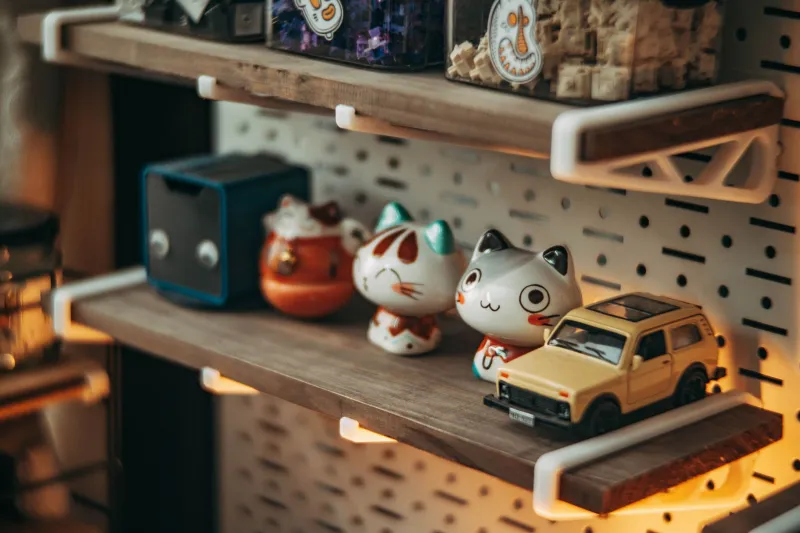
The fears aren't irrational, either. Designer toys and art figures are physical objects. They fade under UV light. They chip if they fall. They attract dust in ways that feel almost personal. And depending on where you live, theft is a real concern for anyone building a visible, high-value collection.
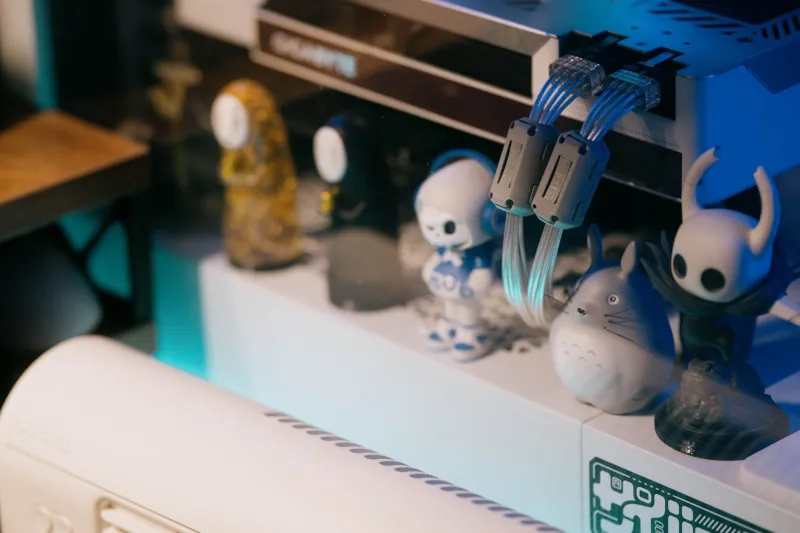
Collectors who've been in the game for a while tend to describe a mental hierarchy for their pieces. Stuff you're okay with handling goes on open shelves. The mid-tier stuff gets glass cases. And the true grails? Sometimes they never make it out of the box at all.
"I have a figure that cost me more than my first car payment," one collector from Chicago shared in a community forum. "It's been in its original packaging for two years. I've opened the box maybe four times just to look at it. Every time I think about putting it on display, I imagine my cat knocking it off the shelf and I just... can't."
That paralysis is more common than people admit.
What Are You Actually Afraid Of?
When you start pulling the thread on display anxiety, a few distinct fears emerge.
Physical damage is the obvious one. A figure on a shelf is a figure at risk. Sunlight degrades paint over time. Accidental drops happen. Humidity warps certain materials. For pieces that are genuinely irreplaceable—limited runs, retired colorways, artist-signed editions—the stakes feel impossibly high.
Depreciation is a quieter concern, but it's real. Collectors who've done their research know that condition matters enormously in the resale market. A figure that's been displayed for years in a bright room isn't worth the same as one kept in archival conditions. If you're holding something as an investment as much as a passion piece, every day on the shelf is technically a risk.
But there's a third fear that doesn't get named as often, and it might be the most interesting one: the fear of using it up.
The Story Might Be the Real Collectible
Here's a thought that tends to make collectors uncomfortable: sometimes the hunt matters more than the having.
The story of how you got a piece—the hours spent refreshing drop pages, the trade negotiation that took three weeks, the moment you spotted it at a convention and your heart rate doubled—that story is alive and vivid as long as the piece remains somewhat out of reach. The second it's just sitting on a shelf, it starts becoming furniture.
This isn't a cynical observation. It's actually a pretty human one. Psychologists have written extensively about how anticipation and acquisition tend to produce more emotional intensity than possession does. The brain is wired for the chase. Once the chase is over, it moves on. The figure stays. The feeling fades.
Some collectors have found ways to work with this rather than fight it. Rotating displays—where pieces cycle in and out of prominent spots—help keep the visual experience fresh. Others build dedicated viewing rituals around their most prized figures: a specific time of week, good lighting, no distractions. Treating display like an event rather than a permanent state.
"I stopped thinking of my best pieces as decorations," said one collector from Austin who runs a small Instagram account dedicated to his art figure setup. "I think of them more like records I pull out when I actually want to listen. They don't need to be on the turntable all the time to matter."
The Case for Actually Living With Your Collection
There's a counterargument worth making here, and it's a strong one.
A figure that never gets displayed isn't really part of your life. It's an asset. And there's nothing wrong with holding assets, but that's a fundamentally different relationship than collecting. Collecting, at its best, is about surrounding yourself with things that reflect who you are, what you love, what you find beautiful or weird or meaningful.
When your grail piece lives in a box under your bed, none of that is happening.
The collectors who seem most at peace with their collections tend to be the ones who've made a deliberate decision about the relationship they want with their pieces. Not every figure needs to be treated the same way. Some are investments, held carefully and kept pristine. Others are meant to be lived with—displayed, enjoyed, occasionally handled, and yes, eventually showing the small signs of a life well-spent in someone's space.
Protection is smart. Archival storage for true investment pieces makes sense. UV-filtering cases are genuinely worth the money. But letting fear turn your entire collection into a storage problem? That's a loss of a different kind.
Finding the Balance
If you're sitting on a piece you love but haven't figured out how to live with, it might be worth asking yourself a direct question: What am I actually protecting this for?
If the answer is resale value, build a proper storage and display strategy that accounts for condition. Invest in UV-protective cases, climate-controlled display options, and documented provenance. Treat it like the asset it is.
If the answer is that you just love it and don't want anything bad to happen to it—that's worth examining more honestly. Because the alternative, a perfect figure that brings you zero daily joy, is its own kind of waste.
The best collections aren't the ones locked away from the world. They're the ones that make you stop for a second every time you walk past them. The ones guests notice. The ones that start conversations you didn't expect to have.
Your grail piece deserves to be seen. Probably even by you.