The Hidden Price Tag: What It Actually Costs to Keep a Serious Collection Safe
Every collector knows the price they paid for a piece. Very few know the full cost of keeping it. And in a hobby where a single figure can be worth thousands of dollars—and where condition is everything when it comes to resale or insurance value—that gap in awareness can be genuinely expensive.
The conversation around collecting tends to focus on acquisition: the hunt, the drop, the deal. The infrastructure side of the hobby gets a lot less attention, even among serious collectors. But the collectors who've been in this space long enough have usually learned the hard way that protection isn't optional. It's just another line item.
The Condition Problem Is Real and It's Gradual
Designer toys are more fragile than they look. Vinyl degrades over time when exposed to UV light, temperature swings, and humidity fluctuations. Paint finishes—especially on limited-edition or hand-painted pieces—can crack, yellow, or fade in conditions that feel perfectly normal to a human being. Resin figures are particularly vulnerable to humidity changes, which can cause subtle warping that's almost invisible until it isn't.
The insidious part is that most of this damage happens slowly. You won't notice your figures yellowing day by day. You'll notice it when you pull a piece out of storage after two years and realize it doesn't look like the reference photos anymore. By then, the damage is done and the value is gone.
This is why serious collectors treat environmental control as a non-negotiable investment, not an optional upgrade.
Display Cases: What You're Actually Paying For
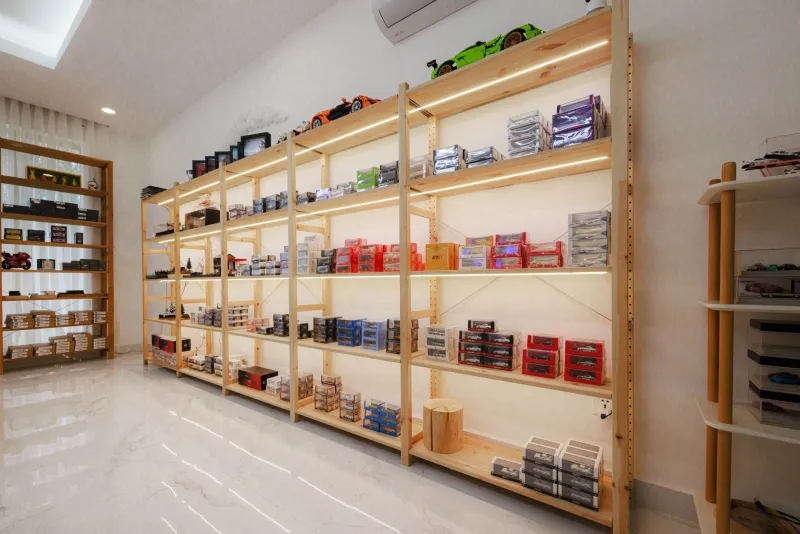
The entry-level solution most collectors start with—open shelving, maybe some risers, decent lighting—is fine for casual display but provides essentially zero protection against the main threats. Dust accumulates. UV light from windows does its slow work. Humidity fluctuates with the seasons.
The next tier up is enclosed display cases, and this is where costs start to become meaningful. A quality acrylic display case for a single figure runs anywhere from $30 to $150 depending on size and UV-filtering properties. For a full shelf setup, you're looking at several hundred dollars before you've even addressed lighting or humidity.
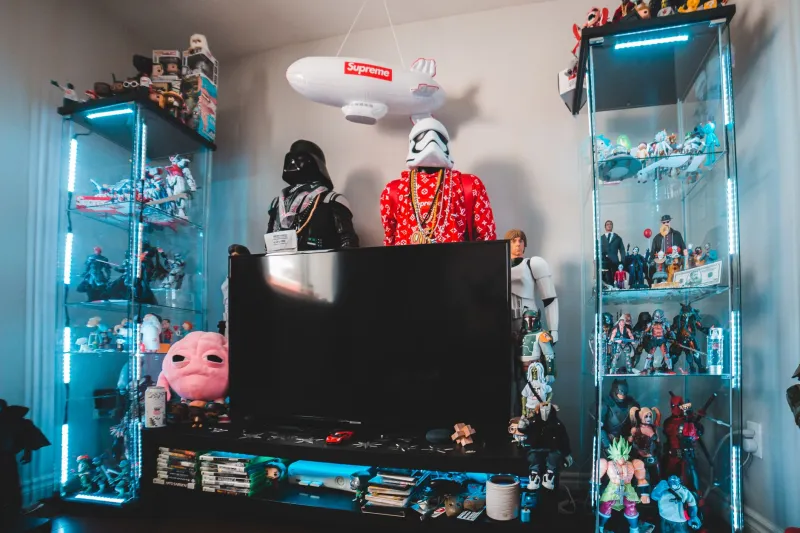
High-end collector cases—the kind with UV-filtering glass, adjustable LED lighting, and sealed gaskets that actually protect against humidity—start around $400 to $600 for a single cabinet and can run well over $2,000 for larger display systems. Brands popular in the US collector community include Detolf setups with custom modifications, specialty acrylic manufacturers, and imported museum-grade display cases from Asian markets.
For the most serious pieces, some collectors invest in individual archival storage when figures aren't on display: acid-free tissue, archival polyethylene bags, and rigid boxes that protect against physical impact. This is less glamorous than a lit display case, but it's the standard used by institutions that actually know how to preserve objects long-term.
The Humidity Question
Anywhere in the US that experiences real seasonal weather changes—which is most of it—humidity is a genuine threat to a serious collection. The ideal range for most vinyl and resin figures is 45 to 55 percent relative humidity, which is not something most American homes maintain naturally, especially during winter heating season or humid summer months.
Small silica gel packs inside enclosed cases help at the micro level and cost almost nothing. A room-level solution requires either a humidifier, a dehumidifier, or both depending on your climate and season—equipment that runs $100 to $400 and requires ongoing maintenance and monitoring. Hygrometers (the devices that measure humidity) are cheap, around $15 to $30, and every serious collector should have at least a few of them.
Collectors with dedicated display rooms sometimes invest in whole-room HVAC modifications to maintain stable conditions year-round. That's a significant home improvement cost that varies wildly by situation, but it's not uncommon among collectors whose collections represent five or six figures in value.
Insurance: The Conversation Nobody Wants to Have
Standard renters and homeowners insurance policies are almost universally inadequate for serious collections. Most policies have a blanket personal property limit that might sound reasonable until you realize it's meant to cover everything you own, not a specialized collection. Collectibles are often subject to sub-limits—sometimes as low as $1,000—that would barely cover a single grail piece.
The solution is a scheduled personal property endorsement (sometimes called a floater) that lists specific high-value items with their appraised values. These endorsements typically cost between 1 and 2 percent of the insured value annually. On a $20,000 collection, that's $200 to $400 per year—real money, but a fraction of what you'd lose without it.
For very large or high-value collections, specialty insurers like Collectibles Insurance Services (which operates throughout the US) offer policies specifically designed for this category of property, including coverage for mysterious disappearance, breakage, and transit—risks that standard homeowners policies often exclude.
Getting a collection properly insured requires documentation: photos, receipts, and ideally professional appraisals for significant pieces. Building this documentation habit from the start is much easier than reconstructing it after the fact.
Off-Site Storage: When It Makes Sense
Climate-controlled storage units are a real option for collectors whose home situation doesn't support proper environmental control, or who've simply run out of display space and need a safe place to keep overflow inventory. Climate-controlled units in most US markets run $75 to $200 per month for a small unit—real cost, but potentially justified depending on what's being stored.
The calculus shifts when you factor in insurance: a dedicated storage facility often has its own insurance coverage, and some specialty collectors' storage services offer enhanced protection as part of their fee structure. For collectors who are actively trading or investing in their collections, the professional storage model also provides a neutral, documented location that can simplify transactions.
The psychological dimension here is worth naming: keeping pieces you own but can't see or access regularly is genuinely hard for many collectors. Part of why we collect is the daily relationship with the objects—the way a well-lit shelf changes the feel of a room. Off-site storage solves a practical problem while creating an emotional one, and that trade-off is personal.
Building the Budget Honestly
When experienced collectors talk about the real cost of a piece, they're increasingly including a rough infrastructure allocation: a percentage of the purchase price that goes toward the ongoing cost of keeping it properly. Estimates vary, but a figure of 10 to 20 percent of purchase price per year—accounting for display infrastructure amortized over time, insurance, and environmental control—is a reasonable starting framework for anyone trying to understand what they're actually committing to.
None of this is meant to be discouraging. It's meant to be honest. The collections that hold their value, that remain in the condition they were acquired in, that survive moves and climate changes and the general chaos of life—those collections belong to people who treated protection as part of the practice from the beginning.
The purchase price gets you the piece. Everything else is what keeps it worth having.